
Blog
Providing School Bus Transportation for All Eligible Students Is Essential to Supporting Families
By Don Tibbets
“Accommodating special needs students is not a burden — it’s our shared legal and ethical responsibility.”
View our Infographfic
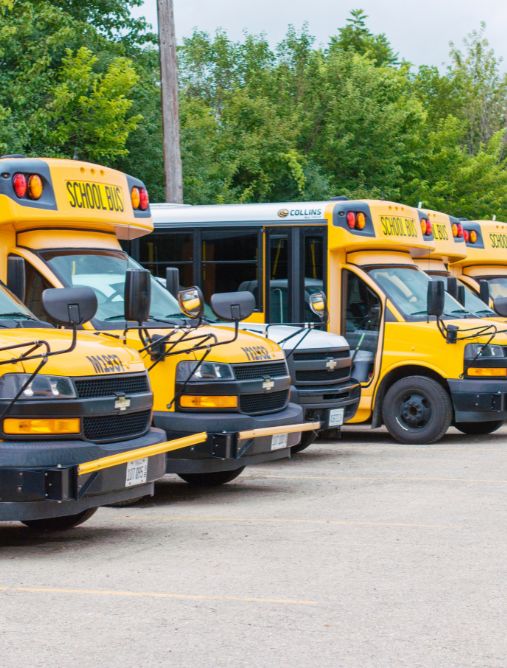
In a recent letter to the Chicago Sun-Times, Chicago Public Schools board member Angel Gutierrez rightly asserts that “accommodating special needs students is not a burden,” and that providing eligible students with transportation to and from school is part of our shared legal and ethical responsibility to ensure that all children have access to a high-quality public education.
The fact is that providing school bus transportation for all eligible students is critically important to children and their families and should never be viewed as a luxury or expendable budget item.
When parents don’t have access to reliable school transportation, it can negatively impact academic outcomes
for students and job opportunities for parents. A recently released report from the Associated Press-NORC Center for Public Affairs research found that when parents are forced to take on the responsibility of taking their children to and from school, 35% of parents say they have missed work, while 11% have even lost a job. Additionally, 37% of parents said that their child has missed school services, tutoring, or academic help due to transportation issues.
The study also illustrates just how widespread the issue has become. Four in five school districts nationwide are currently experiencing a bus driver shortage, which has forced a quarter of those districts to cut or shorten bus routes as a result. Concerningly, a third of all parents surveyed report that school bus service isn’t available in their area at all.
As worrying as these trends are for all families, as the head of a school bus company that specializes in transporting students with special needs in across Northern Illinois and Connecticut, the fact is that the ongoing bus driver shortage and lack of school transportation options disproportionally impacts students with special needs.
On a basic level, picking up groups of students at multiple bus stops is far simpler than the type of personalized, door-to-door “individualized” pickups we provide every day to thousands of students with special needs.
Additionally, bus drivers who work with special needs students – and the aides who assist them –require not only more training than typical school bus drivers, but a particular temperament and heightened level of emotional intelligence. While patience is certainly a quality that any school bus driver must possess, we always look to recruit drivers who are especially empathetic, compassionate, and able to exhibit calm in stressful situations to reduce anxiety for our passengers and their caregivers.
Safety consciousness, consistency, reliability, and trustworthiness are also key attributes that any driver
transporting students with special needs must have. While every school bus driver bears a tremendous amount of responsibility for the safety and well-being of the students they transport, special needs students often require – and thrive on – routine, consistency, and structure.
Many of our drivers will transport the same students for years as they progress through school. The relationships
and bonds drivers form with students and their families – and the level of experience, familiarity, comfort, and trust that they establish – are critical to the services we provide. However, finding folks with these specific skillsets adds additional layers to our recruiting, screening, and hiring process, making these jobs tougher to fill when there are already widespread driver shortages.
Beyond simply finding the right people for this specialized work, the fact is that we simply need more bus drivers and aides than ever before. In 1990, roughly 4.7 million students with disabilities were enrolled in grades K through 12 in the U.S. In 2022, that number increased to 7.3 million. In Chicago alone, there was an increase of roughly 2,500 special needs students who needed school bus transportation from 2023 to 2024, a 32% passenger increase for a system already short on drivers.
Despite these obstacles, we continue to pursue new avenues to find and recruit the drivers we need and our passengers deserve. To tap into new pools of talent, we are partnering with churches and community organizations to find individuals with the qualities we seek who may never have considered a highly rewarding career as a bus driver for students with special needs.
As we work to address these challenges, it is worth pointing out that 2025 marks the 35th anniversary of the Americans with Disabilities Act being signed into law. The landmark piece of legislation, which prohibits discrimination based on disability and guarantees equal access across public life, has had a wide-ranging impact, not the least of which is maintaining accessibility standards for schools and transportation systems.
It is critical that we continue to focus on advancing the goals that this groundbreaking legislation first codified 35 years ago. Beyond just guaranteeing that every student has access to a high-quality public education, we must ensure that school bus transportation is viewed not as a luxury but a right, and that every eligible student is provided with the necessary transportation to and from school that meets their individual and unique needs.